So you want to grow Blood Orange
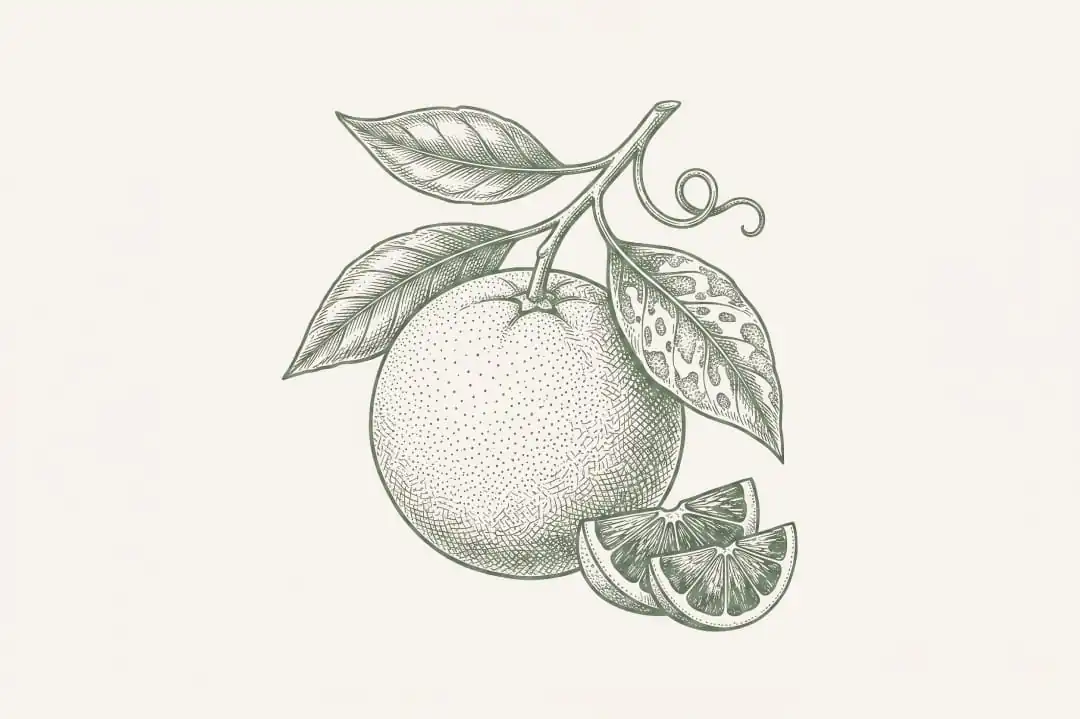
Blood Orange ~ Citrus sinensis
Family: Rutaceae
We bought our blood orange in Victoria. It did reasonably well there, took to the horse manure enthusiastically, and survived being eaten to the ground by the sheep. Twice. Each time it came back. There is something to be said for a tree that refuses to take a hint. It made the move to NSW with us and is now genuinely thriving, producing fruit that looks like something out of a still-life painting and tastes better than any orange I’ve bought from a shop. The sheep are fenced out. Mostly.
Why blood orange suits the Mid North Coast
Blood oranges develop their characteristic red flesh through a pigment called anthocyanin, which is triggered by cool overnight temperatures during the fruit development period. This is the detail that matters most for where you grow them. Without cool nights, the fruit develops normally but the flesh stays orange. The Mid North Coast sits in a useful middle ground. Our winters are mild by southern standards but cool enough overnight through June and July to develop reasonable colour in the flesh, particularly in the Maccas and Tarocco varieties. Sanguinello tends to need cooler conditions and colours less reliably here.
The tree itself is well suited to the coast. It handles humidity better than some citrus and the mild winters suit it without the frost risk that makes blood orange growing complicated further south.

Getting the timing right across Australian climates
Blood orange is planted as a grafted tree rather than sown from seed. Spring is the preferred planting time across most of Australia.
Subtropics (NSW coast, SE Queensland):
Spring planting August to October. The tree grows well but flesh colour depends on how cool your winter nights get. Coastal NSW produces good colour. The further north and warmer the winters, the less anthocyanin develops and the closer the flesh colour is to a standard orange.
Temperate (Sydney, Melbourne, Adelaide):
Spring planting September to November. Blood oranges perform exceptionally well in temperate Australia. Cooler winters produce the most intensely coloured flesh and the best flavour. This is arguably the ideal climate for blood orange in Australia.
Tropics (Darwin, Cairns, Far North Queensland):
Not well suited. Insufficient winter cooling means the flesh colour never fully develops and reliable fruiting is difficult. Other citrus varieties are a better investment in this climate.
Cool and alpine (Canberra, Tasmania, NSW highlands):
Spring planting once frost risk has passed. Produces excellent colour and flavour but young trees need frost protection through their first few winters. A sheltered north-facing position is worth finding.
For variety, Moro is the most widely available and colours most reliably across a range of climates. Tarocco has superior flavour and is worth seeking out. Both perform on the Mid North Coast. The main harvest window on the coast runs from July through September, with Moro generally earlier than Tarocco.

Soil & Fertilising
Blood orange has the same soil requirements as citrus generally. Free-draining soil is the priority. Waterlogged roots lead to root rot, a weakened tree, and the cascade of pest and disease problems that follow stress. On the Mid North Coast, raise the planting position or improve drainage before planting if your soil holds water after rain.
pH between 5.5 and 7.0, ideally around 6.0 to 6.5. Alkaline soils cause the tree to struggle to absorb iron and manganese even when those minerals are present, producing yellowing leaves that won’t resolve until the pH is corrected.
Blood orange is a hungry tree and responds visibly to good feeding. Our tree in Victoria took to horse manure particularly well, which makes sense. Aged manure adds organic matter, improves soil structure, and provides a slow-release nitrogen source that suits the tree’s long growing season. The key word is aged. Fresh manure near the root zone burns roots and encourages excessive soft growth that attracts pests.
Use a dedicated citrus fertiliser four times a year: late winter, late spring, summer, and early autumn. Supplement with a liquid feed through the growing season. Consistent feeding produces consistent fruiting. A tree that is fed irregularly fruits irregularly.
Magnesium deficiency is common in citrus on the Mid North Coast. Yellowing between the veins on older leaves while the veins stay green is the sign. Epsom salts dissolved in water and applied as a soil drench two to three times a year corrects it. Include it in the routine.
Mulch generously over the root zone but keep it well clear of the trunk. A wide, deep mulch ring conserves moisture, moderates soil temperature, and feeds the soil as it breaks down. Mulch touching the trunk creates conditions for collar rot and shelter for pests at the base of the tree.

Sun and shade
Full sun, at least six hours a day. A blood orange in part shade will grow and may fruit, but production drops and the tree is more susceptible to fungal disease in the humid conditions shade creates. A north to northeast facing position with protection from strong westerly winds is ideal on the Mid North Coast. Wind desiccates the foliage, stresses the tree, and increases pest pressure.

Planting
Grafted trees only
Grafted trees from a reputable nursery. Seed-grown citrus takes years to fruit and produces unpredictable results. A grafted blood orange on a good rootstock is productive sooner and more disease-resistant. Check the graft union before purchasing. It should be a clean, healed join with no cracking or weeping sap.
The graft union must sit above soil level after planting and must stay there. Burying it removes the disease-resistance benefits of the rootstock and invites collar rot at the base of the tree. This is the most important detail at planting time and one of the most commonly overlooked.
Dig a hole twice as wide as the rootball and no deeper. Backfill with the existing soil rather than heavily amended mix, which can create a drainage barrier at the edge of the hole. Water in thoroughly and mulch the root zone. Keep mulch well clear of the trunk.
If you’re on a rural property with sheep or other livestock, fence the tree properly from day one. Our tree survived two complete defoliations in Victoria, but that resilience is not something to test on purpose. A young tree stripped to bare wood is a tree under serious stress, and a stressed citrus tree is a tree that invites every problem on the list below.

Water & Light
Consistent watering through the growing season. Irregular moisture causes fruit drop, skin splitting, and the kind of tree stress that opens the door to pests and disease. Deep watering once or twice a week through summer, reducing through winter as the tree slows down.
The root zone rather than the foliage is where water belongs. Drip irrigation is worth setting up if you have multiple citrus trees. It keeps moisture consistent, keeps the leaves dry, and removes the variation of hand watering through a busy week.
During fruit development, from late summer through winter on the Mid North Coast, consistent moisture is particularly important. This is the period when splitting and fruit drop from water stress is most likely. A tree that dries out significantly and then receives heavy rain or irrigation will split fruit. It is the same mechanism as splitting carrots, splitting cabbage heads, and every other vegetable that cracks after irregular watering.

Problems and troubleshooting
Pests
The most significant ongoing pest for citrus on coastal NSW. The wasp lays eggs in soft new growth, producing woody galls on the stems. Larvae develop inside through winter and emerge as adults in spring. Prune out all galls between July and August before adults emerge, cutting at least 10cm below the gall. Bag the prunings and bin them. Do not compost. Prevention through avoiding heavy nitrogen applications and hard pruning in late winter, which produce the soft new growth the wasp targets, is as important as the annual gall removal.
Ants running up and down the trunk means aphids on the new growth above. Deal with both together. A band of horticultural glue around the trunk stops ants climbing. For the aphids, a strong jet of water, neem oil, or insecticidal soap applied to new growth handles active infestations. The honeydew aphids produce leads to sooty mould on the foliage, which reduces photosynthesis. Fix the aphid problem and the sooty mould stops spreading.
Brown or white waxy bumps on stems and leaf undersides. They weaken the tree and produce honeydew that leads to sooty mould. Horticultural oil spray applied in autumn when young crawlers are active is the most effective treatment. Apply thoroughly to all surfaces including the undersides of leaves. Repeat two weeks apart for persistent infestations.
Larvae tunnel through new leaves leaving silvery trails and causing the leaf to curl and distort. Most active during warm months when the tree flushes new growth. Established trees tolerate the damage without serious long-term harm. Young trees are more vulnerable. Eco-oil or neem oil applied to new growth as it emerges reduces infestation. No treatment works once the larva is inside the leaf.
Present and active across the Mid North Coast. The female lays eggs in ripening fruit, larvae tunnel through the flesh, and the fruit becomes inedible. Exclusion bags over ripening fruit clusters are the most reliable protection. Protein bait traps reduce adult populations. Harvest promptly once fruit reaches maturity rather than leaving it on the tree past its peak.
Diseases
Fungal disease producing dark spots on the fruit skin. Common in humid coastal conditions. Affects appearance rather than flesh or flavour. Copper-based fungicide sprays from petal fall through to harvest reduce infection. Rake up and bin fallen leaves and fruit, which harbour the spores. Consistent management rather than occasional intervention is what keeps it in check.
Soil-borne disease causing root decay and bark discolouration at the crown. The tree wilts and declines despite apparently adequate water. Poor drainage is the primary cause and there is no recovery once the crown is severely affected. Good drainage and keeping the graft union above soil level are the prevention.
Black coating on leaves and stems growing on honeydew produced by scale and aphids. Fix the underlying pest problem and the mould stops spreading and weathers off in time. A horticultural oil spray helps break it down faster.
Non-pest problems
The most common disappointment with blood orange in warmer climates. The red pigment requires cool overnight temperatures through the fruit development period to develop fully. If your winters are warm, the flesh will colour partially or not at all regardless of how well the tree is grown. On the Mid North Coast, Moro and Tarocco varieties colour most reliably. Accept that the colour may be less intense than what you see in photos from cooler climates and focus on flavour, which develops more reliably than colour in subtropical conditions.
Uniform yellowing of older leaves suggests nitrogen deficiency. Yellowing between the veins with green veins remaining on older leaves indicates magnesium deficiency. The same pattern on younger leaves points to iron or manganese deficiency, usually caused by high soil pH. A consistent fertilising program and a soil pH check resolve most yellowing over time.
Caused by irregular watering during fruit development. A dry period followed by heavy rain or irrigation causes the flesh to expand faster than the skin can accommodate. Consistent moisture through the fruiting season prevents it. Harvest fruit promptly once ripe rather than leaving it on the tree where it becomes more vulnerable to splitting and fruit fly.

Pruning
Blood orange, like all citrus, does not need heavy pruning to fruit well. The goal is a tree that is the right size, has good airflow through the canopy, and is free of dead, diseased, and pest-affected wood. Little and often is the right approach. A tree pruned lightly each year is healthier and more productive than one left alone for several years and then cut back hard.
On the Mid North Coast, prune after the main harvest finishes in September, before the spring flowering flush. This is the window that avoids cutting off developing fruit, allows the tree to respond with healthy new growth ahead of flowering, and keeps the cycle clean.
Light maintenance pruning, removing dead wood, water shoots, and suckers below the graft union, can be done any time of year. What to avoid is heavy pruning in summer when fresh cuts are vulnerable to sunburn on exposed bark, or in the lead-up to winter when new growth stimulated by pruning has insufficient time to harden.
For gall wasp management, July to August is a separate and non-negotiable pruning window. All galls must be removed and disposed of before adults emerge in spring. This is best done as a dedicated task rather than combined with general pruning.
Temperate growers in cooler zones should wait until frost risk has passed before any significant pruning, typically September to October.
Start with the non-negotiables: dead, diseased, and damaged wood. Then remove water shoots, the long upright non-fruiting growth that appears through the canopy and drains energy without producing fruit. Remove suckers from below the graft union immediately whenever they appear. These grow from the rootstock, not the fruiting variety, and left unchecked they will eventually dominate the tree.
Then look at branches that are crossing or rubbing, branches growing inward toward the centre of the canopy, and any growth that is significantly reducing airflow through the interior. Remove these selectively rather than opening up the centre the way you would a stone fruit. Citrus fruits on the outer tips of branches and prefers a dense, closed canopy. Thin for airflow, not for an open centre.
Skirt the lower branches so foliage is not touching the ground. This reduces pest access and keeps the lower canopy drier after rain.
Never remove more than 20% of the canopy in a single pruning. Citrus responds poorly to heavy pruning and a tree that has lost a significant portion of its canopy at once will put energy into recovery rather than fruiting. If the tree needs significant reduction, spread it across two or three seasons rather than doing it all at once.
For size control, cut back the longest branches to a lateral branch or bud pointing outward. This reduces height and spread without removing fruiting wood indiscriminately. A blood orange tree managed this way stays productive and at a manageable size indefinitely.
Sharp, clean secateurs for branches up to 1cm. Loppers for anything up to 3cm. A pruning saw for larger branches. Clean tools between trees with a diluted bleach solution or methylated spirits to avoid spreading disease. This matters more than most people realise, particularly with citrus diseases that move easily on contaminated blades.
Cut at a slight angle just above a bud or lateral branch. Flat cuts hold water and increase the risk of disease entry at the cut surface. Avoid leaving stubs, which die back and become entry points for rot. A clean cut to a bud or lateral heals faster and leaves less dead wood behind.
When and how to harvest
On the Mid North Coast the main harvest window runs from July through September depending on variety, with Moro coming earlier than Tarocco. The skin turns from green-orange to a deep orange, often with a reddish blush. Cut one open to check the flesh before committing to harvesting the tree.
Taste is the most reliable guide. A ripe blood orange has sweet-tart juice with the berry undertone that distinguishes it from a standard orange. A fruit that is still tart and thin-juiced needs more time. One that tastes flat and the juice runs pale has been on the tree too long.
Cut fruit from the tree with secateurs rather than pulling. Leave a short piece of stem attached. Handle carefully as the skin, while thicker than Meyer lemon, still bruises and the flesh will show through cuts or compression marks on the surface.
Harvest promptly once fruit is ripe. Blood oranges left on the tree past peak are prime targets for fruit fly and begin to lose their flavour complexity. A productive tree in a good season produces more than most households use fresh, which is where the kitchen section becomes useful.

Companion plants
- Nasturtiums (attract aphid predators, trap crop)
- Borage (attracts beneficial insects)
- Comfrey (dynamic accumulator, chop and drop mulch)
- Lavender and aromatic herbs (attract beneficial insects)
- Lemongrass (deters some pests)
Plants that aren’t friends
- Other citrus planted too close (concentrates gall wasp and disease pressure)
- Fennel (allelopathic to most plants)
- Grass to the trunk (competes for water and nutrients, harbours pests)
- Sheep (see lede)

In the kitchen
Blood orange does things in the kitchen that no other citrus does. The colour alone changes a dish. A pale dressing becomes something vivid. A simple salad becomes something people photograph before they eat it. The flavour is a standard orange with a raspberry or cherry note underneath, which sounds contrived until you taste it. It earns the reputation.
Whole fruit keeps at room temperature for one to two weeks, in the fridge for up to a month. Juice freezes well in ice cube trays and is one of the better ways to handle a large harvest. Frozen blood orange juice cubes dropped into sparkling water or a cocktail through summer is a reasonable return on a good winter crop.
Blood orange marmalade
The classic use of a citrus surplus. Slice the fruit thinly, cook with sugar and water until the peel softens and the mixture sets. Blood orange marmalade is a deeper, richer colour than standard marmalade and has the berry note underneath the bitterness that makes it interesting rather than just sweet. Sterilised jars, properly sealed, keep for a year.
Blood orange curd
The same method as lemon curd but with blood orange juice. The result is a pale pink to deep red curd depending on the colour of your fruit, with a flavour that is less sharp than lemon and more complex than a plain orange. Goes on toast, through yoghurt, between cake layers, or directly from the jar. No further justification required.
Blood orange syrup
Juice reduced with sugar until thick. Keeps in the fridge for several weeks. Pour over pancakes, ice cream, or panna cotta. Mix into cocktails or sparkling water. A useful way to deal with juice from fruit that has gone slightly past its fresh eating prime.
Segmented in salads
Blood orange segments over bitter leaves, fennel, and shaved parmesan with a simple dressing is one of the better winter salads. The colour contrast is striking and the flavour combination works. The bitterness of the leaves and the sweetness of the orange pull in opposite directions in the way that makes a salad worth eating.
With duck
The classic orange and duck pairing is better with blood orange. The berry note in the fruit cuts through the fat of the duck in a way that is more interesting than standard orange. A pan sauce made with blood orange juice, a splash of red wine, and a little stock is not a complicated thing to make and the result is worth the effort.
Juice
Freshly squeezed blood orange juice is one of those things that is genuinely different from anything you can buy. The colour is extraordinary and the flavour has a depth that commercial juice, blended and pasteurised, doesn’t retain. Worth squeezing a glass and drinking it immediately at least once a season just to remember why the tree is there.
Campari spritz
Blood orange juice, Campari, and sparkling water over ice. The bitterness of the Campari and the berry note of the blood orange are made for each other. A drink that looks as good as it tastes and takes about forty-five seconds to make. A productive blood orange tree in July makes this an easy habit to develop.