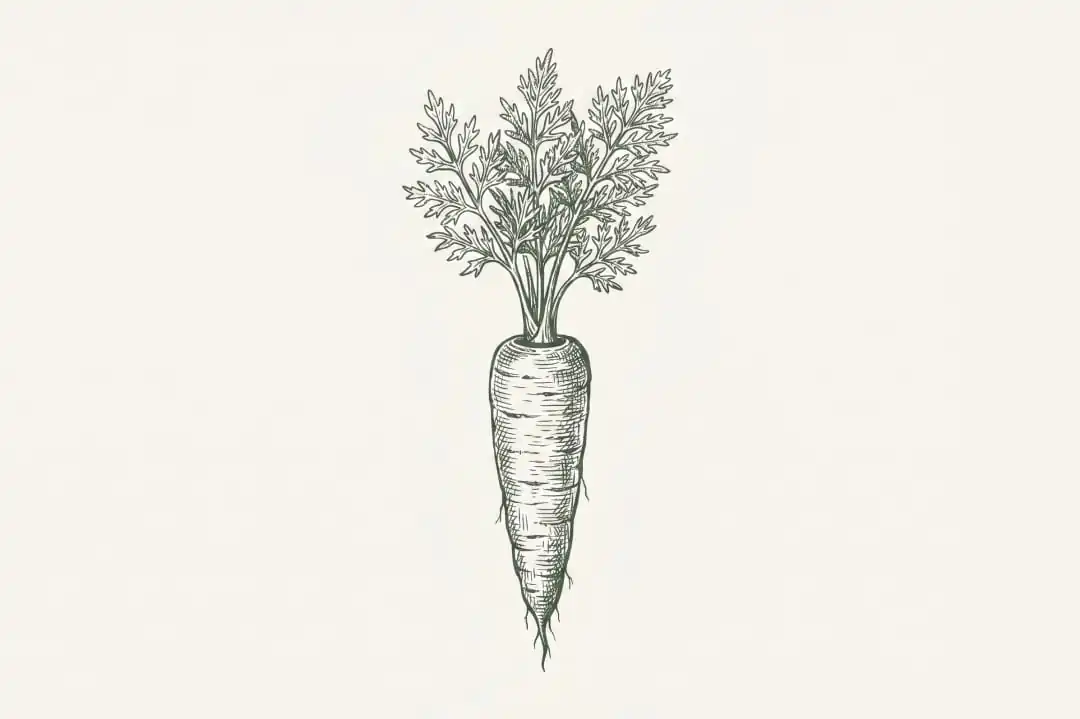
So you want to grow Carrots
Carrot ~ Daucus carota
Family: Apiaceae
Carrots have a reputation for being beginner-friendly. That reputation is partly true and partly misleading. The growing part is simple enough. Getting them to germinate reliably, produce straight roots, and stay ahead of the pest pressure on the Mid North Coast is where most people find out the vegetable has opinions. Get the soil right and the timing right and they mostly take care of themselves. Skip either of those steps and you’ll be pulling forked, stunted roots out of ground that looks fine on the surface.

Getting the timing right across Australian climates
On the Mid North Coast our window is autumn through spring. Sow from March and keep going through to August. Avoid December through February entirely. Summer heat stops germination, causes the roots to turn bitter and woody, and brings the pest pressure to a level that isn’t worth managing.
Subtropics (NSW coast, SE Queensland):
Autumn through spring. March to August. Out of the ground before the summer heat builds.
Temperate (Sydney, Melbourne, Adelaide):
Late summer through autumn and again in spring. February to May, and August to October. Melbourne growers can extend the season further in both directions.
Tropics (Darwin, Cairns, Far North Queensland):
Dry season only. April to August. High humidity and heat outside that window make reliable growing close to impossible.
Cool and alpine (Canberra, Tasmania, NSW highlands):
Spring through summer. September to February. Carrots handle light frosts once established but germination needs soil above 10°C, so don’t rush the spring planting.
Variety selection matters more than most guides acknowledge. On the coast, shorter varieties like Chantenay and Nantes types handle heavier soils better than long Imperator types, which need loose, stone-free ground to depth. If your soil is anything short of ideal, grow shorter roots and grow them well rather than fighting the soil for a result.

Soil & Fertilising
This is where carrot growing is won or lost. The root needs to push down through the soil unobstructed. Anything in the way — stones, hard clods, fresh manure, compaction — and the root forks, bends, or gives up going down and gets fat instead. Deep, loose, well-drained soil is what you’re working toward.
On the Mid North Coast, clay-heavy soils need serious preparation. Work the bed to a depth of 30cm, breaking up any clods. Raised beds are the simplest solution if your native soil is too heavy. A mix of quality vegetable mix and sharp sand gives carrots what they need.
Do not add fresh manure before planting carrots. Nitrogen-rich soil produces lots of leafy top growth and forked, hairy roots. Prepare the bed several months ahead if possible, using compost that has fully broken down. Well-rotted compost is fine. Fresh anything is not.
pH should sit between 6.0 and 7.0. Slightly acidic to neutral. Carrots are less fussy about pH than brassicas but they don’t like highly acidic ground.
Potassium and phosphorus matter more than nitrogen for root crops. A balanced fertiliser applied before sowing and again at the six-week mark is enough. Avoid high-nitrogen feeds through the growing season.
[PHOTO: Soil preparation — broken up bed, compost being worked through, raised bed if applicable]

Sowing & Planting
Direct sowing only
Carrots do not transplant. The taproot is the point. Disturb it during transplanting and the root forks or dies. Sow directly where they are to grow, every time.
Sow seeds 5mm deep into a fine, well-raked seedbed. Carrot seeds are small and need good contact with moist soil to germinate. Sow thinly in rows 30cm apart. Germination takes 10 to 20 days depending on soil temperature. They are among the slower germinators in the vegetable garden, which catches beginners off guard. Mark your rows clearly and resist the urge to resow before the first round has had its full chance.
Thin seedlings to 5 to 8cm apart once they’re 5cm tall. Thinning is not optional. Overcrowded carrots produce small, twisted roots that aren’t worth harvesting. Thin in two stages if needed: first to 3cm, then to final spacing once you can see which seedlings are strongest.
Mixing carrot seed with dry sand before sowing helps achieve even spacing and reduces the need for heavy thinning. It doesn’t look elegant but it works.
Succession sow every three to four weeks through the season to avoid a glut and a gap.

Water & Light
Full sun. Carrots grown in shade produce weak tops and poor roots. The autumn and winter growing season on the Mid North Coast gives us good sun without the heat stress, which is part of why the timing works so well.
Watering during germination is critical. The seed needs consistently moist soil from sowing until it breaks the surface. Let the bed dry out in those first two weeks and germination fails. A light watering once or twice a day in dry conditions, keeping the surface consistently moist without waterlogging, is what the seeds need.
Once established, water deeply and less frequently. Shallow surface watering encourages the roots to stay near the top of the soil rather than pushing down. Inconsistent watering, particularly a long dry period followed by heavy rain, causes roots to crack. The same mechanism that splits cabbage heads splits carrot roots.
Mulch lightly between rows once the seedlings are established. Keep mulch clear of the crown. On the Mid North Coast it also helps moderate soil temperature through the cooler months.

Problems and troubleshooting
Pests
Less of a problem on the Mid North Coast than in cooler southern states, but present. The adult fly lays eggs near the base of the plant and the larvae tunnel into the root, leaving brown channels through the flesh. Fine mesh exclusion netting prevents egg-laying. Avoid thinning in warm weather when the flies are most active, as the scent of bruised carrot foliage attracts them. Interplanting with onions or other alliums helps mask the smell.
The main threat at germination and seedling stage, particularly after rain. They eat seedlings at soil level overnight, leaving rows with gaps that look like germination failure. Iron chelate-based baits are effective and safe around animals. Check beds in the evening and after rain through the first four weeks.
The larvae of click beetles, wireworms are slim, hard-bodied grubs that tunnel into roots. More common in beds that were recently turned from lawn or pasture, which is relevant on a rural property where new garden beds are cut from grass. Thorough cultivation before planting and crop rotation reduces their numbers over time. There’s no quick fix once they’re present.
Root-knot nematodes are a genuine issue in subtropical soils. They cause galls on the roots and stunted, misshapen growth that looks like something went wrong underground. Marigolds as a companion or cover crop before planting help suppress nematode populations. Soil solarisation in summer is effective where beds can be left fallow. Rotating carrot beds and avoiding heavily infested ground helps manage pressure over time.
Possums mostly go for the lush green tops rather than the roots. The result is the same: a decimated bed. If you’re on a rural NSW property and you’re not netting, you’re essentially running a free salad bar. Exclusion netting or a well-constructed frame is the only reliable solution.
Diseases
Dark brown spots on the foliage, often with a yellow halo. Spreads in warm, wet conditions, which makes it relevant here. Improve air circulation through adequate spacing, avoid overhead watering, and remove affected foliage. It rarely kills the plant but weakens it and reduces root quality if severe.
Oval pits or cavities on the surface of the root, caused by calcium deficiency and irregular watering. The carrot is still edible but the affected area needs cutting away. Consistent watering and adequate calcium in the soil prevent it. The same irregular moisture that causes splitting in other vegetables causes cavity spot in carrots.
White powdery coating on the foliage, more common late in the season as plants age. Adequate spacing and airflow reduce it. It rarely affects the root unless the plant is very severely affected. Remove and compost affected foliage at end of season.
Non-pest problems
The root splits into two or more prongs. The most common cause is an obstruction in the soil: a stone, a clod, a lump of unbroken compost, or fresh manure. The root hits resistance and divides around it. Thorough soil preparation to depth, removal of stones and clods, and avoiding fresh organic matter near planting time prevent it. Forked carrots taste exactly the same, for what it’s worth.
Excessive fine root hairs along the main root, usually caused by too much nitrogen in the soil. Fresh manure is the typical culprit. The carrot is edible. The fix is time and rotation — let the soil settle and avoid high-nitrogen inputs before the next crop.
Roots split longitudinally, most often when a dry period is followed by heavy watering or rain. The root takes up water faster than the outer skin can accommodate. Consistent watering is the prevention. Cracked carrots deteriorate quickly in the ground, so harvest promptly if you know heavy rain is coming and the roots are near maturity.
Carrot seeds have a shorter viability than most vegetables. Old seed germinates poorly. Buy fresh seed each season rather than relying on leftovers from two years ago. Soil that dried out during the germination window is the other common cause. Cover sown rows with hessian or damp newspaper until germination starts, then remove immediately. It keeps moisture in without blocking the seedlings.
When and how to harvest
Most varieties are ready in 70 to 80 days, though the slower-developing autumn crop on the coast often runs longer. The shoulder of the root — the top where it meets the soil — will be visible and should be around 1.5 to 2cm in diameter for standard varieties. Nantes and Chantenay types are harvested smaller than Imperator types.
Pull one from the middle of the row to check before committing to the whole bed. Size, colour, and taste all tell you more than a calendar date.
To harvest, loosen the soil with a fork alongside the row rather than pulling from the top. Pulling hard on the foliage snaps the root, particularly in heavier soils. Get under it first, then ease it out.
Carrots can be left in the ground past maturity for several weeks without significant quality loss in cool weather. In warm conditions they become woody and bitter quickly. Harvest as soon as temperatures start to climb in spring.
[PHOTO: Harvested carrots laid out — full root showing, tops still on]

Companion plants
- Onions and leeks
- Chives
- Rosemary
- Sage
- Marigolds (Tagetes — nematode suppression)
- Lettuce
Plants that aren’t friends
- Dill (once it flowers — attracts the same pests)
- Parsnip (same family, same pest pressure, don’t concentrate it)
- Fennel — antagonistic to most vegetables and should be kept isolated entirely

In the kitchen
A carrot pulled from your own ground and eaten within the hour is a different vegetable from what’s in the supermarket. The sweetness is sharper, the texture firmer. If you’ve been underwhelmed by carrots your whole life, this will change that.
Remove the tops immediately after harvest. The foliage draws moisture from the root and they go limp quickly if left attached. Unwashed carrots keep in the fridge for two to four weeks in a sealed bag or container. In cool weather they can be stored in a box of slightly damp sand in a shed for several months. Don’t wash until ready to use.
Freezing
Blanch peeled, sliced carrots for three minutes, refresh in cold water, drain, and freeze in portions. They won’t have the texture of fresh but are perfectly good in cooked applications. A useful way to deal with a glut.
Lacto-fermented carrots
Carrot sticks in a 2% salt brine, submerged and left at room temperature for three to five days. Crunchy, slightly sour, and keeps in the fridge for months. Good alongside rich meat dishes and genuinely easy to make. A useful introduction to fermentation if you haven’t tried it.
Pickled carrots
Quick-pickle with white wine vinegar, a little sugar, salt, and aromatics like coriander seed and bay leaf. Ready in 24 hours. Keeps in the fridge for a month. Works well with Asian-style dishes and in banh mi-style sandwiches.
Roasted
The best argument for carrots in most kitchens. Cut into long pieces, toss with olive oil, salt, and something sweet — honey, a bit of orange juice, balsamic. High heat, 200°C, until the edges caramelise. Thirty-five to forty minutes. The sweetness concentrates and the texture gets somewhere between tender and slightly chewy at the edges. Hard to go wrong.
Carrot soup
Simple and genuinely good when the carrots are fresh. Onion, garlic, ginger, carrots, stock. Blended smooth. The ginger and a squeeze of lime at the end lift it out of canteen territory. A standard in the kitchen when the garden produces more than we can use fresh.
Raw
Freshly pulled, scrubbed, eaten whole while you’re still in the garden. Honest, sweet, and a reminder of why you bother with all of this.
Carrot top pesto
Don’t throw the tops. Young, fresh carrot tops are slightly bitter and herby and work well blended with olive oil, garlic, parmesan, and lemon juice. Use them like you would rocket or parsley in a rough pesto. Works on pasta, toast, as a dressing for roasted vegetables.