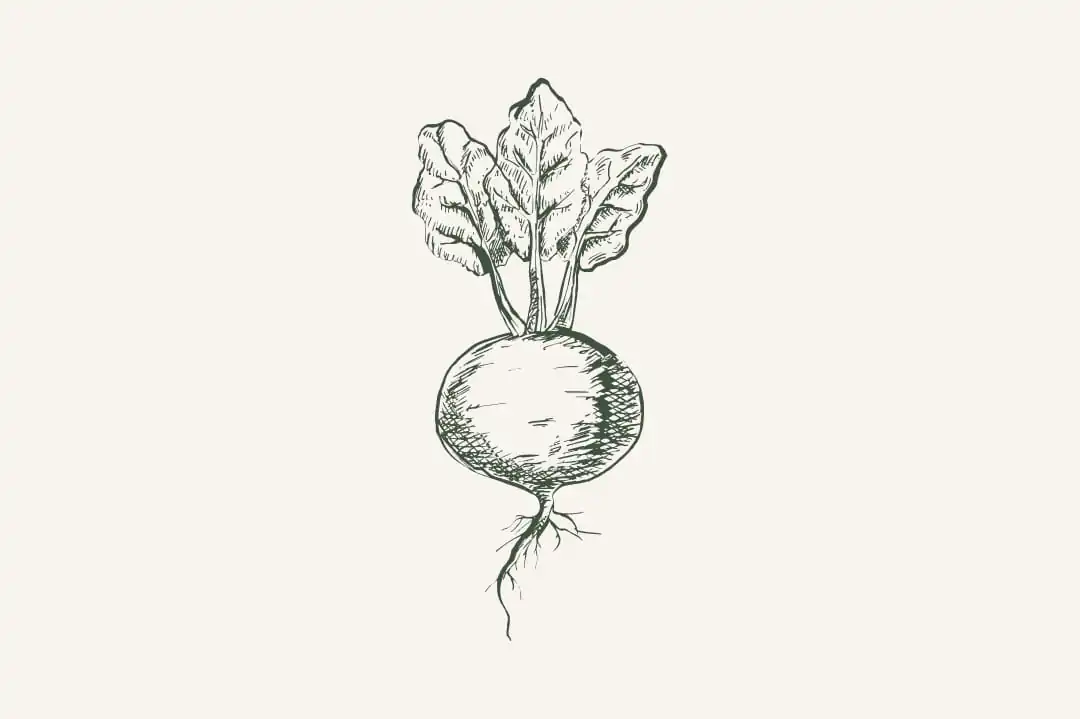
So you want to grow beetroot
Beetroot ~ Beta vulgaris
Family: Amaranthaceae
We’re at Turners Flat, near Kempsey on the NSW Mid North Coast. Subtropical edge territory. Warm humid summers, mild frost-free winters, and the kind of wet season that makes you rethink any vegetable that needs dry feet.
Beetroot is a cool-season crop. It’s happiest under 20°C and starts making bad decisions above 25 degrees, bolting to seed before the root has a chance to develop. Our summer is largely off the table for this reason. But winter here is excellent beetroot weather. Mild days, cool nights, no frost to worry about. If you get the timing right, beetroot on the Mid North Coast is about as close to foolproof as vegetables come.

Getting the timing right across Australian climates
The advice on seed packets is written for some composite imaginary garden. Here’s a more honest breakdown by region.
Subtropics (NSW coast, SE Queensland): Autumn through winter and into spring. March to August is your window.
Temperate (Sydney, Melbourne, Adelaide): Mid-winter through to autumn. July to March.
Tropics (Darwin, Cairns, Far North Queensland): Dry season only. April to August. The wet season is not worth fighting.
Cool and alpine (Canberra, Tasmania, NSW highlands): Spring through summer. September to February, choosing fast-maturing varieties.
From Kempsey north into Queensland, March is the ideal start. The summer humidity is dropping, temperatures are becoming cooperative, and there’s still enough warmth for solid germination. Sow in batches every two to three weeks through the season. One big sowing gives you a glut all at once. Staggered sowing gives you something you can actually use.

Soil & Fertalising
Beetroot is building something underground. Compacted, waterlogged, or nutrient-poor soil will give you nothing worth harvesting, or something so small and woody it barely qualifies.
What you want is loose, well-drained, and rich in organic matter. Deep and crumbly, not dense. If you’re working with heavy clay soil (common on the Mid North Coast), break it up generously with compost before planting. Raised beds are worth the effort here.
Dig to at least a spade’s depth. Work through aged compost or well-rotted animal manure a week or two before sowing. We use aged horse and sheep manure from the property. Fresh manure directly at planting time is a risk not worth taking.
pH should sit between 6.0 and 7.0. Beetroot doesn’t perform well in very acidic soil. A cheap pH test from the hardware store tells you where you stand. A light lime application a few weeks before planting can bring things into range if you need it.
One thing worth knowing: beetroot has a higher boron requirement than most vegetables. Deficiency shows up as stunted roots, hollow centres, and internal browning. A small amount of borax diluted in water, applied to the soil before planting, is worthwhile if you’ve had those problems before. Don’t overdo it. The gap between helpful and harmful with boron is narrow.

Sun and shade
For light, full sun produces faster, better growth. Beetroot will tolerate part shade and will even grow reasonably under taller crops, but in our March to August window here, give it the sun.

Sowing & Planting
Direct is better
Sow directly into the ground. Beetroot develops a taproot that doesn’t appreciate being disturbed at transplant time. Seedlings from a punnet work in a pinch, but buy small ones and plant carefully. Direct sowing gives you better results with less fuss.
The seeds themselves are worth understanding. Each “seed” is actually a cluster of two or three seeds bound together in a corky coating. Sow one and you may get multiple seedlings. Soaking seeds overnight in room-temperature water before sowing softens that coating and improves germination noticeably. It’s worth the extra step.
Sow 1 to 2cm deep, roughly 5 to 10cm apart with row spacing of 25-30cm. When seedlings reach 3 to 5cm tall, thin to the strongest plant in each cluster, aiming for about 8 to 10cm spacing. Skipping the thinning is one of the most common mistakes. Crowded beetroot stays small.

Water
Consistent moisture is what you’re after. Not soaking, not dry. The classic mistake is letting the soil dry out and then overcompensating, which causes the root to grow fast after a big drink and split under the pressure.
Good drainage is non-negotiable. Waterlogged roots rot, and seedlings in soggy soil are prone to damping off before they’ve had a chance to establish. If your beds pool after rain, that’s a problem to solve before planting.
Mulch around plants once they’re established. In our climate it keeps moisture in during drier spells and regulates soil temperature. Straw works well. Keep it off the crowns of the beets themselves.

Problems and troubleshooting
Beetroot is one of the easier vegetables to grow. It doesn’t attract the insect parade that brassicas do, and it’s not as temperamental as carrots. But there are things to watch for.
Pests
Slugs and snails The most consistent problem, especially in autumn when you’re sowing into moist soil. They target seedlings at ground level. Iron chelate-based baits are effective and safe around animals. Check seedlings at night in the first few weeks.
Leaf miners Fly larvae that tunnel through leaves, leaving pale winding trails. More of an annoyance than a serious threat. The root keeps developing even when the leaves look ordinary. Pinch off badly affected leaves and dispose of them. Don’t compost them in your garden pile.
Aphids Can cluster under leaves in autumn. A strong spray of water usually handles them. Neem oil works for heavier infestations.
Possums and rabbits Both a genuine issue on a rural NSW property. They’ll take leaves, and possums in particular seem to find the red-stemmed varieties appealing. Netting is the only reliable solution. We net our beds from the start now.
Brush turkeys (for those further north) If you’re in subtropical Queensland or the Far North Coast, brush turkeys will dig out seeds and seedlings with impressive dedication. Netting or physical barriers from day one. There’s no negotiating with them.
Diseases
Cercospora leaf spot Tan or grey circular spots with a reddish-purple border on older leaves. This is a fungal disease that favours warm, wet conditions and is common in subtropical NSW and coastal Queensland. It looks worse than it is. The root keeps developing. Remove affected leaves, improve air circulation, and avoid overhead watering. Clear plant material thoroughly after harvest because the fungus overwinters in debris. Rotate your beet crops each season.
Damping off Seedlings collapsing at soil level shortly after germination. Almost always waterlogged soil. Improve drainage, ease off the water, and give seedlings good air movement.
Non-pest problems
The plant throws up a flowering spike instead of developing the root. Triggered by heat, specifically temperatures sitting consistently above 25°C. This is why summer planting doesn’t work here. If you see it beginning, harvest immediately. The root will still be edible.
Probably Irregular watering. Consistent moisture and mulching fix this.
Almost always a spacing issue. Thin your seedlings. It feels wasteful until you compare the results.
When and how to harvest
Beetroot shows you where it is. The crown pushes above the soil surface as the root develops, so you can see its progress without guessing.
The sweet spot is around golf ball size, roughly 4 to 5cm across. This is when the flavour is best: sweet, earthy, and tender. Baby beets harvested earlier are excellent roasted whole. Past 8 to 10cm they get woody and the flavour drops off.
Harvest when the ground is moist rather than dry. The root pulls cleanly without snapping. Leave about 3cm of stem attached. It’s not fussiness. It stops the beet bleeding during cooking, which preserves the colour and keeps your bench looking less like a crime scene.
The leaves are edible. Young leaves are good raw in salads. Older leaves cook well as you would silverbeet. Don’t waste them.

Companion plants
- Garlic
- Onions
- Silverbeet
- Lettuce
- Brassicas
- Kohlrabi
Plants that aren’t friends
- Climbing beans
- Field mustard
- Charlock

In the kitchen
This is the part worth spending time on. Because if you’re growing beetroot for the first time, you might find yourself with twenty of them and no clear plan. The answer is that you have more options than you think.
Fresh storage Beetroot keeps well in the fridge for two to three weeks with the tops removed. In cooler months in a dark, ventilated space, a larder or cool shed, they’ll hold for a month or more. Traditional storage packed in damp sand works for larger quantities.
The classic, and one of the simplest preserves you can make. Boil or roast until tender, peel, slice or quarter, and pack into sterilised jars with a vinegar brine. White wine vinegar, a little sugar, a few spices. Pickled beetroot keeps for months in the pantry and is a different proposition entirely from the tinned version.
Fermented beets Lacto-fermented beets are worth making at least once. Salt, water, a jar, time. The result is tangy and alive in a way that pickling isn’t, and the brine itself is worth drinking. Excellent alongside rich meats.
Roasting
Wrap whole beets in foil and roast at 200°C for 45 to 60 minutes depending on size. The skin rubs off easily once cooled. Roasting gives a depth and sweetness that boiling doesn’t. From there they go into salads, onto bread with goat’s cheese, or onto a plate alongside whatever else came out of the garden that week.
Raw
Raw and grated Fresh young beets grated raw with carrot, a little orange juice, and a mustard dressing is a revelation if you’ve never tried it. No cooking, genuinely good, and gone in minutes.
One practical note:
Beetroot stains can make you and your kitchen look like a crime scene. Hands, bench, chopping board, stove. You can use gloves when peeling. And when cleaning, use cold water on surfaces, not hot.